Helping Children Feel Safe During Big Emotions: Why Your Calm Matters More Than the Perfect Response
As parents, we’ve all experienced those moments when our child is upset, and our first instinct is to fix the situation, rush the emotion away, or become overwhelmed ourselves. I’ve learned that one of the greatest gifts we can offer our children isn’t having the perfect response—it’s helping them feel safe while they experience their emotions.
Recently, my son and I spent the day at the aquarium. As we started walking toward the exit, he became upset because he wanted to stay and see more exhibits. I knew we had enjoyed a full day together and that he was getting close to nap time, so I calmly held the boundary that we were leaving.
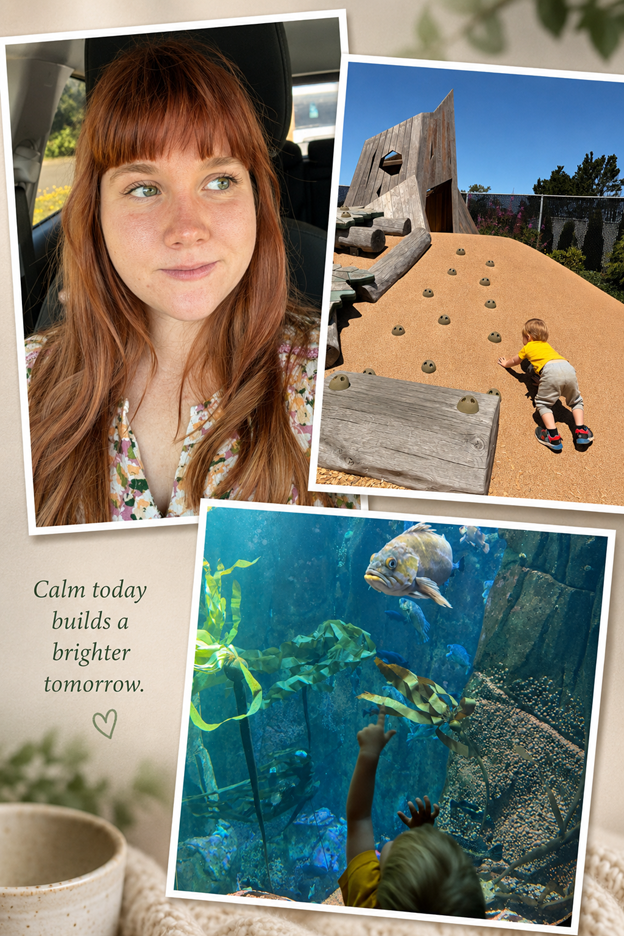 Instead of becoming frustrated or changing my mind, I gently repeated that it was time to go. I encouraged him to think about his favorite exhibit and reminded him how much fun we had. I asked him if he could say “thank you” for the experience. Before long, he smiled, said “thank you,” and even gave me a kiss on the cheek. We walked out together without the meltdown that might have happened in the past.
That moment reminded me that children often aren’t upset because they’re trying to be difficult. Sometimes they simply don’t want something wonderful to end. They need our help navigating disappointment, not because their feelings are wrong, but because they’re still learning what to do with them.
I’ve also noticed that the calmer I am, the calmer my son tends to become. When I’m overwhelmed, my thoughts feel foggy, and it’s harder for me to respond thoughtfully. But when I take care of myself through consistent routines, mindfulness, and moments to pause and breathe, I’m able to stay more grounded. That calm becomes something my son can lean on.
Children learn emotional regulation by watching the adults who care for them. They notice how we respond to stress, disappointment, and frustration. This doesn’t mean we have to be calm all the time. I’m certainly not. I lose my patience sometimes too, and afterward I often feel guilty.
But I’ve learned that guilt doesn’t help me grow—reflection does. Instead of replaying the moment over and over, I ask myself, ‘What can I do differently next time?’ Every difficult parenting moment becomes another opportunity to practice.
One habit that’s made a surprising difference is planning my next day before I go to bed. Even taking a few minutes to think through our schedule and set intentions helps me begin the day with more clarity. Mindfulness doesn’t have to mean finding thirty uninterrupted minutes of silence. It can be taking a few slow breaths while washing dishes, listening to the sounds of nature while your child plays at the park, or simply noticing your breath for a minute while your little one is happily occupied. These small moments add up.
When we fill our own cup, we often discover we have more patience available for our children.
Most importantly, I’ve learned that all emotions are welcome. I want my son to know it’s okay to feel disappointed, frustrated, sad, or angry. My role isn’t to stop him from having those emotions. My role is to help him feel safe while he experiences them, while also teaching him to be kind to others and to himself.
If you’re reading this after a difficult parenting moment, I hope you’ll offer yourself the same compassion you would give a friend. Meltdowns happen. We all lose our patience sometimes. Parenting is a practice, not a performance.
Forgive yourself. Learn from today. Show up again tomorrow.
Your child doesn’t need a perfect parent. They need you—calm when you can be, compassionate when you can’t, and always willing to keep learning right alongside them.